The fibers are then separated from one another and generally aligned in a line so that they all point in the same direction.
Technical Specifications & Parameters
| Specification Attribute | Standard Spec |
|---|---|
| Step 1 | The fibers are then separated from one another and generally aligned in a line so that they all point in the same direction. |
| Step 2 | The next step is to separate these aligned fibers into slivers, which are then spun into thread or yarn. |
| Step 3 | The cotton is next combed with very fine brushes in order to remove any leftover impurities as well as any cotton strands that are too short. |
| Step 4 | After around fifteen percent of the total volume has been extracted, what is left are long, straight strands of cotton that have been evened out and aligned. Finally, these strands of combed cotton are spun into thread or yarn. |
What is Combed Cotton ?
- Combed cotton is a kind of cotton that has been given a specific treatment before being spun into yarn, which results in it having a much softer feel than regular cotton.
- As a general rule, combed cotton is more expensive than conventional cotton.
History
- The Nile Valley in Egypt is the location of the origin of cotton's use in clothing, which goes back roughly 5,000 years.
- The Egyptians were the first people to domesticate cotton and turn it into a material that could be used for clothing.
- Before the Pilgrims arrived in the new world in 1620, the cotton plant had already made its way to the United States, arriving in 1556 and being planted in Florida.
- Cotton's popularity in the southern United States continued to rise over the course of the next few decades. Even though there was more demand for cotton, the process of turning cotton fiber into fabric was mostly unaffected by this trend.
- Up until 1902, when an Englishman named Nasmith discovered a method for combing cotton in addition to his own hair, combing was only used on hair. He was granted a patent for the method, after which the device came to be known as the Nasmith Comber.
Process for Making Combed Cotton
|
Step 1 |
The fibers are then separated from one another and generally aligned in a line so that they all point in the same direction. |
|
Step 2 |
The next step is to separate these aligned fibers into slivers, which are then spun into thread or yarn. |
|
Step 3 |
The cotton is next combed with very fine brushes in order to remove any leftover impurities as well as any cotton strands that are too short. |
|
Step 4 |
After around fifteen percent of the total volume has been extracted, what is left are long, straight strands of cotton that have been evened out and aligned. Finally, these strands of combed cotton are spun into thread or yarn. |

What Makes it Stand Out
|
Texture |
The texture of combed cotton is softer because it lacks short threads to stick out and prickle, and all dirt and impurities have been removed from the thread . |
|
Durable |
Combed cotton is also stronger, because shorter and breakable fibers have been removed through combing. |
Applications & Usage
|
Clothing |
Blouses, shirts, t-shirts, etc. |
|
Towels, bed linens, etc. |
Care Instructions
- In most cases, the directions for taking care of combed cotton are identical to those for normal cotton.
- Cotton may be washed and dried at any temperature, but it is important to exercise caution while caring for combed cotton items such as clothing, bed linens, and towels.
- Items made of coloured combed cotton or knits should be washed at tepid temperatures with gentle detergents to extend the life of the fabric.
- Ten minutes before the drying process is complete, put the load of combed cotton into the tumble dryer and start the cool-down cycle. This will enable the cotton fibers to relax.
- Before using them, you should always wash new bed linens and towels made of combed cotton to make them softer and more pleasant.
- Iron on cotton using the preset mode and heat that is medium.
Care & Maintenance Guidelines
In most cases, the directions for taking care of combed cotton are identical to those for normal cotton.
In most cases, the directions for taking care of combed cotton are identical to those for normal cotton.
Cotton may be washed and dried at any temperature, but it is important to exercise caution while caring for combed cotton items such as clothing, bed linens, and towels.
Cotton may be washed and dried at any temperature, but it is important to exercise caution while caring for combed cotton items such as clothing, bed linens, and towels.
Items made of coloured combed cotton or knits should be washed at tepid temperatures with gentle detergents to extend the life of the fabric.
Items made of coloured combed cotton or knits should be washed at tepid temperatures with gentle detergents to extend the life of the fabric.
Ten minutes before the drying process is complete, put the load of combed cotton into the tumble dryer and start the cool
down cycle. This will enable the cotton fibers to relax.
Before using them, you should always wash new bed linens and towels made of combed cotton to make them softer and more pleasant.
Before using them, you should always wash new bed linens and towels made of combed cotton to make them softer and more pleasant.
Iron on cotton using the preset mode and heat that is medium.
Iron on cotton using the preset mode and heat that is medium.
Frequently Asked Questions
Was this fabric wiki guide helpful?
Your feedback helps our textile team continuously refine our specs.
Hari Krishna Fabric Experts
Textile Mill & Quality Engineering Team
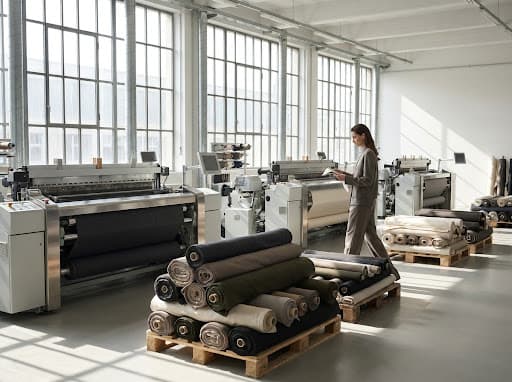
The Hari Krishna Textile Quality & Engineering team oversees weaving precision, GSM batch audits, and fiber testing under international ISO standards at our Surat mill facility.