
Digital Fabric Printing in Seattle, Washington for Fashion Brands, Designers, and Manufacturers
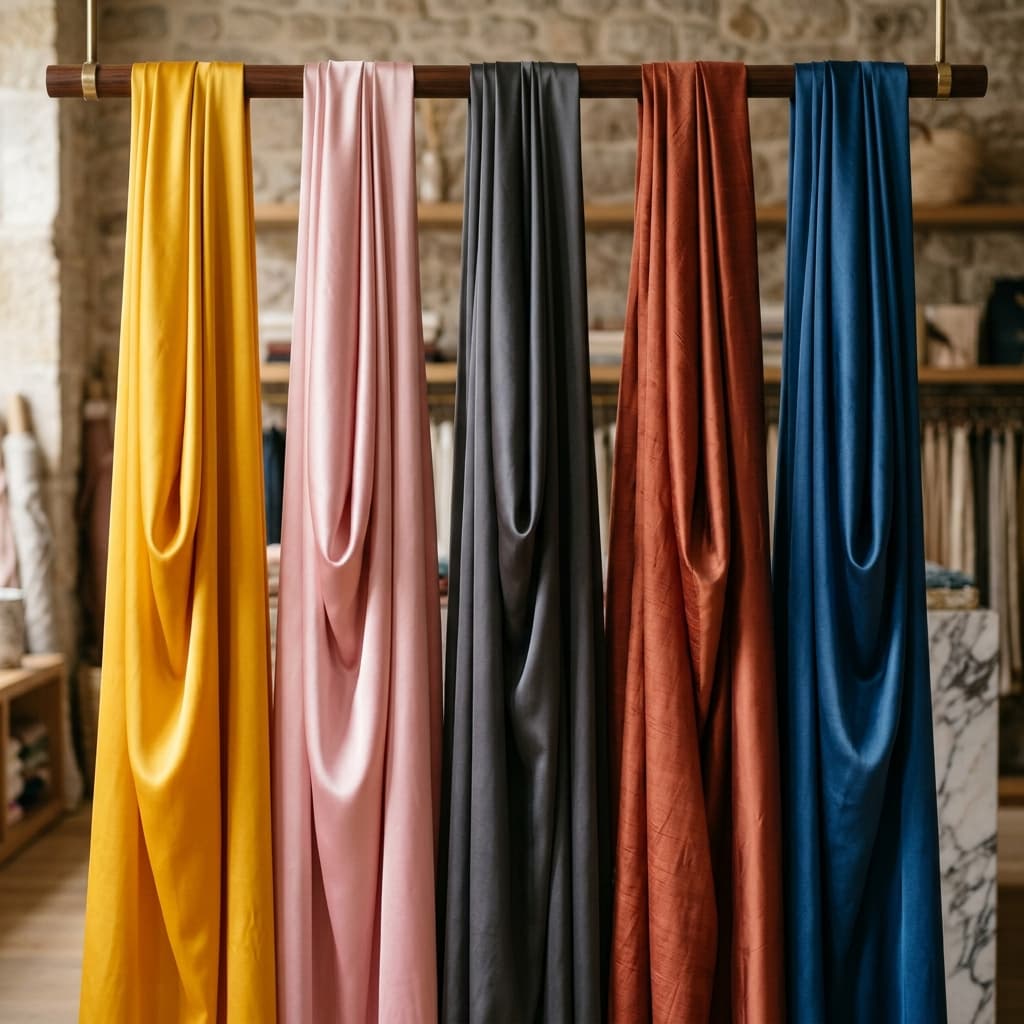
"Seattle has a genuine apparel and fashion ecosystem, but finding digital fabric printing in Seattle for a fashion collec..."
Seattle has a genuine apparel and fashion ecosystem, but finding digital fabric printing in Seattle for a fashion collection is not the same as finding a company that prints a logo on a T-shirt. Buyers searching for custom textiles run into garment printers, promotional-fabric printers, print-on-demand fabric websites, and production textile suppliers — each built for a different job. For a Seattle designer or apparel brand, the right choice depends on whether you need a few yards for sampling, continuous fabric for a collection, or wholesale fabric printing that repeats reliably season after season.
Quick Answer
There are two good ways to get custom fabric printing in Seattle done: a local printer for small projects or projects made of polyester, or a wholesale textile supplier like Hari Krishna for fashion-grade fabric, printed yardage, samples, and large-scale production.
- Small local project: Seattle-area printers work when proximity and fast communication matter most.
- Polyester apparel or display fabric: Local dye-sublimation providers can be a fit.
- Custom fabric by the yard: For small jobs, online textile printers have more fabric options.
- Wholesale production: Hari Krishna's digital fabric printing program, starting at 100 meters per design, is built specifically for repeatable yardage and full collections.
- Your printer doesn't need to be in Washington — a production supplier can ship approved fabric directly to your studio or manufacturer.
What Digital Fabric Printing Actually Means
Digital fabric printing puts color on textiles using computer-controlled inkjet technology, instead of the setup needed for traditional screen printing, which involves making a screen. That means it works well for:
- Complex, multi-color, or photographic artwork
- Gradients and fine detail
- Frequent design changes or multiple colorways
- Short-to-medium production runs
It is not the same as direct-to-garment printing, and the distinction matters enormously for a fashion brand:
| Garment Printing | Fabric Printing | |
| Process | Blank T-shirt → artwork printed → finished garment | Fabric → artwork printed → finished fabric → cutting → sewing → garment |
A Seattle streetwear label producing 50 printed T-shirts may only need garment printing. A designer producing 300 dresses from custom floral fabric needs fabric-level printing — and confusing the two is the single most common mistake buyers make when comparing quotes.
Digital Fabric Printing vs. Garment-Level Printing
| Factor | Garment-Level Printing | Fabric-Level Digital Printing |
| Printed item | Finished garment | Fabric yardage |
| Typical customer | Merch brands, events, small apparel businesses | Fashion brands, designers, manufacturers |
| Output | T-shirts, hoodies, finished garments | Fabric rolls, yards, or meters |
| Print placement | Usually front/back/panel | All-over, repeat, or engineered |
| Fabric selection | Limited to available garments | Multiple fabric bases |
| Sampling | Finished garment proof | Fabric swatch / printed sample yardage |
| Best use | Merchandise and prototypes | Collections and production |
| Scaling | Based on garment quantity | Based on fabric quantity |
A business can advertise "digital textile printing" while actually focusing on flags, banners, or trade-show graphics. Before comparing quotes, Seattle buyers should ask exactly what substrate is printed, how it's supplied, and whether the output is continuous fashion yardage.
What Seattle's Apparel Market Means for Fabric Sourcing
Seattle has a stronger apparel identity than its reputation as a technology hub might suggest. An economic study commissioned by enterpriseSeattle and Seattle/King County development organizations found Washington's fashion and apparel industry generated $8.3 billion in gross business revenue and directly employed over 34,000 people, concentrated mostly around Seattle. That figure is historical rather than a current market-size estimate, but it reflects a genuinely established regional apparel cluster, not a niche one.
The city's fashion identity also carries a distinct Pacific Northwest character — home to REI, Filson, Brooks Running, Eddie Bauer, and KAVU, reflecting a strong outdoor and performance-apparel heritage alongside independent fashion labels. That range means a Seattle buyer's actual fabric needs can span performance polyester, printed cotton, linen, technical knit, or sustainable fabric — which is exactly why a supplier should be evaluated on fabric and production capability, not simply on physical location.
Digital Fabric Printing Suppliers Compared
| Supplier | Location / Model | Best For | Fabric Capability | MOQ |
| Hari Krishna | India / global shipping | Wholesale fashion production | Cotton, linen, viscose, silk, polyester, and blends | From 100 meters/design |
| Seattle Design and Print | Seattle, WA | Local printing projects | Fabric printing alongside digital/large-format printing | Contact for quantity |
| Seattle On Canvas | Seattle, WA | Polyester apparel prototypes, display textiles | Polyester-only, sheet-based (no bolts/rolls) | Quantity discounts, sheet-based |
| Stella Color | Seattle, WA | Commercial graphics and fabric applications | Sublimation fabric printing among broader services | Contact for requirements |
| Spoonflower | Online / U.S. | Small custom orders, design testing | Multiple fabric types, continuous fabric available | Swatch, yard, meter formats |
| The Textile District | Online / USA | Designers and small manufacturers | Cotton, linen, blends, knits, synthetics | From 1 yard |
| Raspberry Creek Fabrics | Online / USA | Apparel-focused custom fabric | 20+ fabric types, print-on-demand | Half-yard minimum |
| Contrado | Online/international | Custom fabric, sampling, wholesale | Reactive, pigment, and sublimation; 100+ fabrics | No minimum stated |
Hari Krishna's digital printing starts at 100 meters per design across cotton, linen, viscose, silk, polyester, and blended fabrics. It's part of a broader capability that also includes screen printing, block printing, custom dyeing, fabric sourcing, and garment manufacturing.
Local vs. Remote Digital Fabric Printing in Washington
The terms digital fabric printing Washington can be used to talk about several very different services.
When you need to talk to someone in person, get a real sample quickly, pick up your order locally, or fix problems right away with a small prototype, a local provider is clearly the best choice.
A remote or wholesale textile supplier has the advantage when you need more fabric choices, continuous fabric rolls, custom color development, multiple print technologies, or repeatable wholesale production.
The right question isn't "is the printer in Seattle?" Can this printer deliver the exact textile and production format my collection requires?
What MOQ Should Seattle Fashion Brands Expect?
MOQ for digital fabric printing varies by production model, not by supplier quality:
- The Textile District: custom printing from 1 yard.
- Raspberry Creek Fabrics: half-yard minimum.
- Contrado: no minimum stated.
- Hari Krishna: 100 meters per digital-print design, for production-scale orders.
An artist needs a yard to test one print. A clothing brand that sells in bulk and makes a whole collection needs hundreds of meters. The MOQ should be based on the stage of collection, not on the smallest number that looks good on a home page.
How Much Does Digital Fabric Printing Cost in Seattle?
There's no single reliable Seattle price point, because suppliers are offering fundamentally different products — a one-yard custom print, a polyester display sheet, and 500 meters of reactive-printed cotton shouldn't be compared on the same price-per-yard basis.
Delivered cost depends on fabric type, GSM, width, printing method, print coverage, total meterage, sampling, finishing, and shipping (plus customs, where applicable). A useful supplier quote breaks down fabric + printing + finishing + shipping — not a single "digital printing cost" figure.
Which Printing Method Fits Your Design?
- Digital fabric printing — best for artwork with many colors, gradients, photographic detail, or frequent colorway changes; well suited to both sampling and production.
- Reactive printing — commonly used for cellulosic fabrics like cotton and linen, followed by steaming, washing, and drying.
- Sublimation printing — most relevant to polyester and compatible synthetics; used across sportswear and soft signage.
- Screen printing — still makes sense for larger-volume, repeat designs where setup cost spreads across larger quantities.
- Pigment printing — useful across natural-fiber applications, though final hand-feel and durability need to be evaluated on the actual fabric.
What Fabrics Can Be Digitally Printed?
Common options include cotton, linen, viscose, rayon, silk, polyester, nylon, chiffon, georgette, knitted fabrics, and blends — but the real question isn't "can you print cotton?" It's: can you print this exact 180 GSM cotton poplin, at this width, with this artwork, and this required wash performance? That's the question that actually determines whether a fabric works for your collection.
What to Send a Printer Before Requesting a Quote
- Fabric — fiber composition, GSM, width, construction, finish.
- Artwork — final file, repeat dimensions, print scale, color references, placement requirements.
- Quantity — separated into swatch, sample yardage, pilot production, and bulk production.
- Performance — wash fastness, rubbing fastness, lightfastness, shrinkage, hand-feel, print durability.
This prevents a supplier from quoting a technically unsuitable fabric simply because the artwork itself is printable.
Why Sample Yardage Matters More Than a Digital Mockup
A digital artwork file can't exactly show how a print will look and feel on real fabric because when ink meets fiber, color absorption, sharpness, texture, and how large something seems all change.
The safer way for a fashion brand in Seattle to work is as follows: fabric swatch → printed sample yardage → approval → bulk production. Hari Krishna's Fabric Wiki has more information about construction and fibers than a single supplier comparison can. It gives you background on how different printing methods work on different fibers.
How to Choose Between Local and Wholesale Suppliers
- Choose local if you need a prototype immediately, want to visit the printer, or your concept suits a substrate the local supplier supports.
- If you need custom fabric by the yard, a lot of different fabric choices, and small amounts without having to make them in person, choose an online small-batch supplier.
- For making a full collection, choose a wholesale supplier like Hari Krishna when you need production quantities, repeatability, fabric sourcing, printing, testing, and shipping internationally, all in one process.
- Use a hybrid approach — test the creative concept locally, then source the approved fabric at production scale through a wholesale partner — for many growing brands, this is the most practical path.
Hari Krishna: Wholesale Digital Fabric Printing for Seattle Brands Moving Into Production
For a Seattle brand, Hari Krishna becomes relevant the moment the need shifts from "I need a few yards printed" to "I need production fabric printed consistently and delivered to my manufacturer."
Hari Krishna's digital fabric printing program starts at 100 meters per design, across cotton, linen, viscose, silk, polyester, and blended fabrics — and sits inside a broader capability that also covers screen printing, block printing, custom dyeing, fabric sourcing, and garment manufacturing. That's a structurally different offer than a Seattle commercial printer focused on individual sheets, signage, or garment decoration.
A typical production workflow looks like this:
Fabric selection → artwork submission → digital proof → physical strike-off → approval → bulk printing → quality inspection → international shipment → Seattle receiving
For a buyer comparing bulk digital fabric printing near Seattle, physical distance is only one input. Fabric compatibility, production MOQ, quality control, freight cost, and total lead time matter just as much — and on those measures, a wholesale-focused supplier is built for exactly the stage most growing Seattle brands eventually reach.
FAQ
Where Can I Get Fabric Printed In Seattle?
There are some companies in Seattle, but most of them only do polyester dye sublimation or sheet-based apparel printing, not fashion fabric rolls that go on and on. Brands often use a wholesale textile printer that ships production yardage to Washington, D.C., along with local samples to make a full collection.
What is the MOQ for digital fabric printing?
There's no universal MOQ. Suppliers range from half-yard or one-yard custom orders up to production programs starting around 100 meters per design — the right choice depends on whether you're testing a print or producing a commercial collection.
How Long Does Digital Fabric Printing Take?
It depends on the supplier, the fabric, the method, and the amount. Small custom orders can be made in just a few days. However, wholesale production usually takes between 21 and 45 days, depending on the method and design stage. For suppliers far away, international freight costs are added to the time frame.
What's The Difference Between Digital Fabric Printing And Garment Printing?
Digital fabric printing applies design to continuous textile yardage before cutting and sewing. Garment printing applies artwork to a finished garment. A brand producing an all-over print collection generally needs fabric-level printing, not garment decoration.
Do I Need To Buy Fabric Printing Locally, Or Can I Order Online?
No, local sourcing isn't required. A brand can order from another U.S. state or internationally, as long as the supplier meets its fabric specification, quality standards, MOQ, and shipping timeline — local sourcing matters most when speed and physical access outweigh a broader production network.
Before You Place an Order
If you're searching for where to get digital fabric printing in Seattle, don't start with price alone. Send the printer your exact fabric specification, artwork, and repeat size, required quantity, intended product, performance standards, and target delivery date — then request a physical printed sample before approving bulk production.
For a Seattle designer testing one print, a local or low-MOQ online supplier may be the most efficient route. For a fashion brand moving into wholesale, compare production suppliers — starting with Hari Krishna's 100-meter digital printing program — on fabric choice, MOQ, print technology, quality control, lead time, and delivery cost, not location alone.