
Why Every Growing Apparel Brand Needs a Backup Fabric Sourcing Strategy
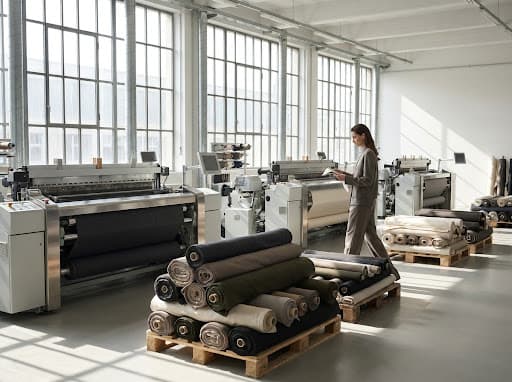
"At the sampling stage, switching fabric suppliers is easy — five meters for a prototype, spot a problem, move on. At 5,0..."
At the sampling stage, switching fabric suppliers is easy — five meters for a prototype, spot a problem, move on. At 5,000 or 20,000 meters, that flexibility disappears. Your fabric is now tied to an approved color, a tested GSM, a production calendar, and a delivery date your garment factory is already planning around. A backup fabric sourcing strategy protects that timeline when a primary supplier can't hold up their end—not by adding suppliers endlessly, but by qualifying the right one before you're forced to.
Quick Answer
A backup fabric sourcing strategy means keeping a qualified secondary fabric supplier ready for critical fabrics — approved in advance, tested with real samples, not searched for mid-disruption.
- Identify which fabrics are genuinely hard to replace, not every fabric you use.
- Document your specification independently of any one supplier's catalogue.
- Test the backup with a swatch and sample yardage before you actually need it.
- Keep the backup supplier for continuity, not to split the work 50/50. Your main seller should handle most of the work.
- Every so often, check the backup again because things like capacity, price, and lead times can change.
Why Supplier Dependency Grows as Brands Scale
This goes against what you would expect. You shouldn't take on more risk when you have more turnover.
But volume locks in specifics — fiber composition, GSM, width, shrinkage, color, finish — all approved against one supplier's exact output. Changing suppliers at scale means re-sampling, re-testing, re-dyeing, and re-approving, while a garment factory's calendar keeps moving regardless. This is exactly why fabric sourcing risk compounds with growth rather than shrinking with it — and it's part of a broader pattern the industry is actively responding to right now.
The 2026 USFIA Fashion Industry Benchmarking Study found US fashion companies sourced apparel from 49 countries this year, up from 46 in 2025, with roughly 65% of large companies sourcing from ten or more countries. Non-economic pressures — geopolitical tension, forced-labor risk, and trade-policy uncertainty — are now cited as the primary drivers of this de-risking, not simply manufacturing cost.
Which Fabrics Actually Need a Backup
Not every fabric deserves contingency planning. A backup earns its place when a fabric is both critical and hard to replace.
| Situation | Why It Matters |
| Used in a best-selling product | Running out hits revenue directly |
| Custom-developed construction or finish | Takes far longer to replace than stock material |
| Custom dyed to a Pantone match | A mill-dyed standard is easy to swap; a matched shade isn't |
| Custom printed | Needs matching print capability, not just a similar base fabric |
| Certification-dependent (GOTS, OEKO-TEX) | Backup must meet the identical requirement — no exceptions |
| Specialty or technical construction | Fewer qualified suppliers exist to begin with |
What Happens Without One
Picture an approved 180 GSM cotton fabric. The supplier calls: they can't produce the next 3,000 meters in your window.
The replacement now has to match fiber composition, GSM, width, construction, hand-feel, shrinkage, color, colorfastness, finish, and certification — all of it, not most of it. Then it needs its own sampling and approval cycle. Every extra day pushes delivery further out, while the garment factory sits waiting on fabric that hasn't arrived. This is precisely why a backup gets qualified before the disruption happens, not after the call comes in.
Building the Strategy, Step by Step
1. Start by classifying your fabric portfolio into three tiers. Normal cotton, basic polyester, and common linings are all low-risk fabrics that are easy to replace and don't need a backup at all. Fabrics that are medium-risk need to come from at least one other source because they have special GSM, construction, or color needs. If it's possible for the business, high-risk fabrics like custom-made, approved, printed, or revenue-critical ones should always have a qualified backup.
If your current sourcing feels scattered before you've even reached this step, our Fabric Supplier Audit Checklist for Enterprise Buyers covers the same verification discipline that applies here.
2. Document the specification, not the supplier relationship. A spec should describe fiber composition, GSM, finished width, construction, finish, color, shrinkage tolerance, and certification requirements — not "the same fabric Supplier X sells." Written this way, it gives any backup something measurable to reproduce, and it's the same discipline that makes it possible to genuinely compare quotes across suppliers rather than comparing two unrelated numbers.
3. Qualify the backup before an emergency forces the question. A webpage is not a qualification. Check genuine capabilities, manufacturing capacity, quality control procedures, sampling, testing, and certifications – most importantly, whether they can meet your target volume on your actual timeframe, not just produce a good tiny sample.
4. Test with a physical sample, not a product description.
Start with buy fabric swatch online: most catalogs with no minimum order requirement. If yes, proceed to sample yardage and test against approved reference from primary supplier- GSM, width, hand-feel, color, shrinkage and after wash finish. Nothing beats a good side-by-side comparison.
5. Check dyeing and printing capability separately from base fabric. If a primary supplier's output is custom-dyed and Pantone-matched, a backup that only stocks greige fabric isn't equivalent yet — the same logic applies to printed fabric, where print capability needs its own evaluation. The color-matching discipline behind this is covered in more depth in Solving the Consistency Challenge in Large-Scale Fabric Dyeing and Printing.
6. Confirm capacity, not just capability.
"We can make 20,000 meters" isn't a good answer by itself. It's more important to know if they can make it in the time frame needed and to the standards that have been agreed upon, rather than just looking at the big number.
7. Keep the backup warm.
If you haven't talked to a supplier in three years, they might not be a good backup anymore. Anytime the specification changes, the volume goes up, or the main supplier's performance starts to slip, revalidation is needed.
Should Orders Be Split Across Two Suppliers?
Not always, and rarely evenly. A single primary supplier with a qualified backup works for most growing brands, since it keeps quality consistent while still providing an exit if something goes wrong. Dual sourcing — actively splitting production between two suppliers — makes more sense for high-volume or business-critical fabrics where any interruption would be genuinely costly. Multi-region sourcing, spreading suppliers across different countries, fits brands specifically exposed to geographic, logistics, or geopolitical concentration risk.
A common allocation gives the primary supplier 80–90% of recurring production, with the backup approved and ready for overflow or emergencies — not carrying regular volume by default.
Why Too Many Suppliers Is Also a Risk
Diversification sounds safe, but it isn't automatically better — and the industry data backs that up. A recent fashion sourcing study found the share of US brands actively diversifying suppliers actually fell from 83% to 58% year over year, with the broader trend shifting toward fewer, more capable vendors rather than the widest possible spread. Every additional supplier adds communication overhead, more sampling, more quality variation, more inspections, and more coordination — three suppliers each producing a slightly different version of "the same" cotton fabric means a production team ends up managing variation, not reducing risk. The goal is controlled diversification, not maximum diversification.
The Dependency Isn't Always the Fabric — Sometimes It's the Process
Greige fabric → dyeing → printing → finishing. If a supplier sources the greige but only one dye house can hit an approved shade, that dye house is still a single point of failure — even when the fabric supplier itself looks diversified on paper.
A genuinely resilient sourcing setup looks at the full production route, not just where the raw fabric comes from. This is part of why brands increasingly plan sourcing around full seasonal cycles rather than reacting order by order — our Spring/Summer 2026 fabric sourcing guide covers how structured early planning reduces exactly this kind of concentration risk before it becomes a live problem.
Backup Fabric Supplier Checklist
- We found and rated the risks of the most important fabrics.
- Specifications written down without relying on any one supplier.
- The backup provider's capacity was checked against the amount you actually want to store.
- Fabric swatch accepted, sample yardage checked against what you already have as a guide.
- Colorfastness, GSM, width, and shrinkage have all been confirmed.
- Checked to make sure they can dye and print, not assumed.
- Where needed, certifications were checked.
- Lead time and MOQ confirmed.
- Backup revalidated on a periodic schedule, not left untouched.
Where Hari Krishna Fits Into a Backup Sourcing Strategy
The real question when evaluating a backup isn't whether another supplier sells something similar — it's whether they can support the same requirements once a primary source is actually constrained. Hari Krishna combines fabric sourcing with sampling, custom development, dyeing, printing, testing, and garment manufacturing under one workflow, which matters when a contingency plan needs to cover more than raw fabric alone.
That shows up in a few practical ways for a brand qualifying a backup:
- Fabric swatches are available with no minimum, useful for evaluating a potential backup before committing any real volume.
- Dyed sample yardage and printed sample yardage test whether a backup can actually reproduce a custom color or print — not just supply a similar base fabric.
- Greige and RFD fabric support full custom development from an undyed starting point; for certified-fiber requirements, a backup needs to match exactly.
None of this means every brand needs one integrated partner acting as both primary and backup. It means whatever backup gets qualified should be tested against the actual failure point being protected against — not assumed capable simply because the catalogue looks similar on the surface.
With access to thousands of fabrics, a verified manufacturing network, and 10+ years of expertise in dyeing and printing, Hari Krishna can support brands from low-MOQ sampling to larger production requirements. This gives buyers an additional option when a backup source needs to cover fabric development, customization, and scalable production—not just material availability.
FAQ
What Is A Backup Fabric Supplier?
A pre-qualified secondary source that can supply your required fabric if your primary supplier can't meet quality, quantity, lead-time, or compliance requirements — tested before an emergency, not during one.
Do Small Apparel Brands Need A Backup Fabric Supplier?
Not for every material, but yes for fabrics that are hard to replace, drive significant revenue, or are custom-developed — prioritize backups there first.
How Do You Qualify A Backup Fabric Supplier?
Write down a specification that isn't tied to any one supplier, check the capacity and quality processes, and then test with a physical swatch and a sample yardage that is compared directly to the reference you've already approved.
Is Dual Sourcing Better Than Relying On One Fabric Supplier?
It reduces dependence, but it takes more work to coordinate and check quality. For most companies that are growing, it makes the most sense to have one main supplier and a qualified backup.
How Often Should A Backup Supplier Be Revalidated?
Whenever specification or certification requirements change, when volume increases, or when the primary supplier's performance starts slipping — not on a set-and-forget basis.
Conclusion
A backup fabric supplier isn't insurance against every possible problem — it's a way to shrink the damage from the ones already known to be possible. Find the essential fabric, make sure there is a real alternative, compare it to your current standard, write down the requirements, and check in on the relationship from time to time. That little bit of discipline up front is often what makes the difference between a supply disruption that takes a few days to work out and one that takes a whole production cycle.