
How to Develop a Custom Fabric Colorway for a Capsule Collection
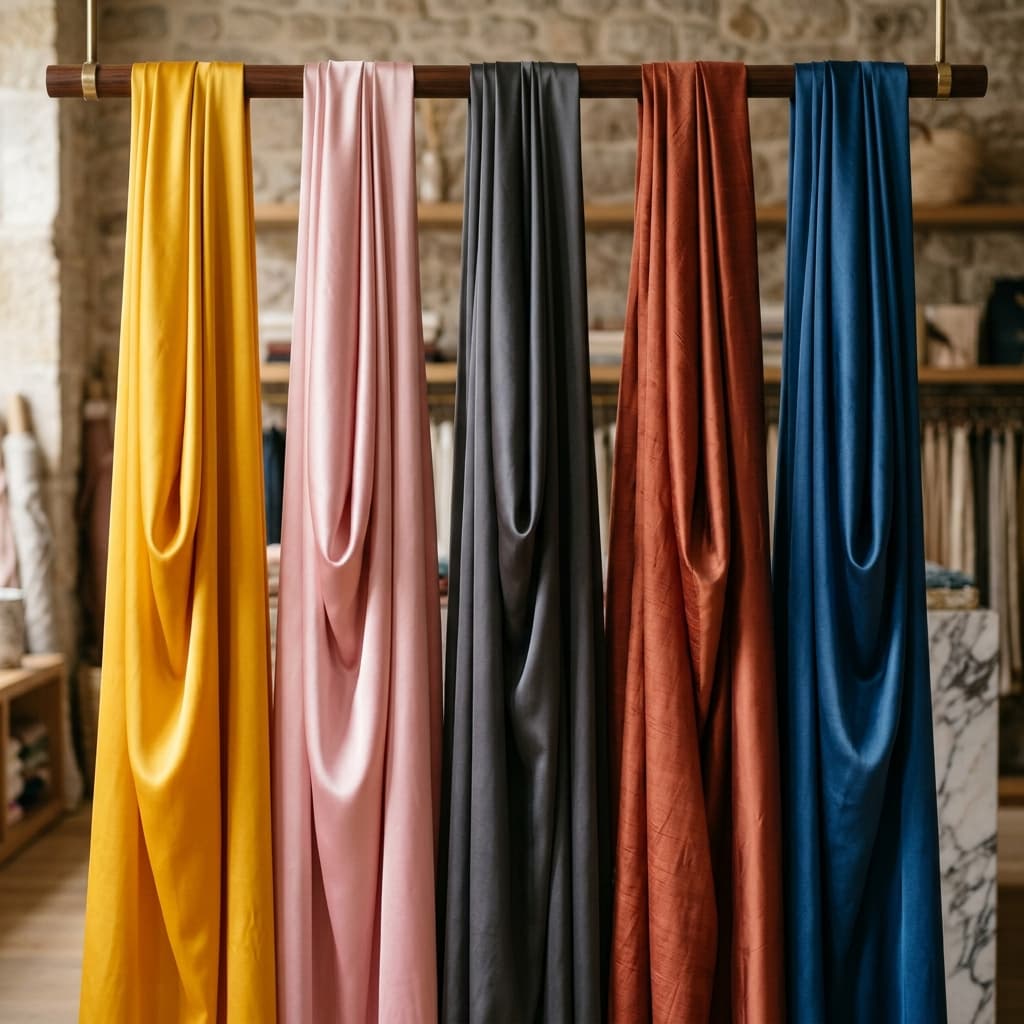
"A capsule collection lives or dies on its color story. Not the fabric quality. Not even the silhouette.Color is the firs..."
A capsule collection lives or dies on its color story. Not the fabric quality. Not even the silhouette.
Color is the first thing a buyer sees, and it's the detail that separates "another basic drop" from something that actually looks intentional.
But developing a custom fabric colorway at capsule scale is a different process than color-matching a bulk production run — smaller batches, tighter timelines, and far less room to absorb a mismatched dye lot.
This guide walks through exactly how that process works, from choosing a base RFD fabric to approving the final shade.
Quick Answer
Developing a custom fabric colorway means starting from dyeable RFD (Ready-for-Dye) fabric, matching a dyed sample — called a lab dip — against a color standard like Pantone, refining it until it's approved, then scaling the exact formula into your capsule volume.
For a capsule collection specifically, keep the palette simple, expect 7 to 21 days for color approval depending on complexity, and always approve the color on your actual base fabric — not a paper swatch.
What You'll Learn About Colorway Development
This guide covers the full process, in the order it actually happens for a small-batch or capsule order:
- What a lab dip is, and why it's different from a strike-off.
- How Pantone matching actually works, step by step.
- Why capsule collections need a different color strategy than bulk runs.
- A realistic timeline, and what actually slows it down.
- What to check before approving a colorway for production.
What a Lab Dip Actually Is
A lab dip is a small swatch of your actual fabric, dyed to match a specific color standard — usually a Pantone reference.
It's not a paint chip. It's not a digital mockup. It's your real base fabric, dyed, so you can see exactly how the color behaves on the material you're actually using.
This matters more than it sounds. The same Pantone code can produce visibly different results on cotton versus viscose versus a blend — fiber type changes how dye absorbs and reflects light.
Lab dip vs. strike-off — know the difference:
| Term | Used For | Confirms |
| Lab dip | Solid dyed fabric | Color match against a standard |
| Strike-off | Printed fabric | Print color, placement, and repeat |
If your capsule includes a printed piece, you're approving a strike-off — not a lab dip.
How Pantone Color Matching Actually Works
Pantone's Fashion, Home + Interiors (FHI) system is the industry-standard reference — a shared language between designer, mill, and dye house so everyone means the same thing by "sage green."
Here's the process, step by step:
- Choose a color standard — a Pantone code, a physical swatch, or a reference photo.
- The colorist mixes a dye formulation and applies it to a small sample of your actual fabric.
- The sample is compared to the standard under controlled lighting — daylight, fluorescent, and LED, since colors can shift between light sources (a phenomenon called metamerism).
- You review and approve, or request adjustments — if it's off, the formula gets refined, and a new lab dip is made.
- Once approved, the formula is locked in and used for your full capsule volume.
Some dye houses run a three-tone lab dip system — producing slightly lighter, on-target, and slightly darker versions side by side — which gives you a clearer visual range to choose from instead of judging a single sample in isolation.
Why Capsule Collections Need a Different Color Strategy
Bulk production can absorb a color-matching hiccup — a slightly off lab dip gets refined, and there's still runway before the full order ships. A capsule collection doesn't have that buffer.
Keep these capsule-specific realities in mind:
- Smaller MOQ should mean a simpler colorway. If you have too many colors in a small batch collection, you may need to do more lab dip rounds, which can cause delays.
- Vibrant and dark colors are easier to match than subtle ones. A bold red is more forgiving than a specific shade of grey or cream, where tiny formula shifts are far more visible.
- Every fabric component needs its own color target. If your capsule pairs a garment fabric with trim or a contrast panel, each material absorbs dye differently — approve them separately, not as a set.
- Digital printing allows unlimited colorways with no per-color minimum, which makes it a practical option for testing multiple capsule colorways before committing to bulk.
Choosing the Right Starting Fabric
Custom colorway development starts before dyeing — it starts with the base fabric itself.
- RFD (Ready-for-Dye) fabric is unbleached, undyed woven, knitted, or greige fabric prepared specifically to take a custom dye evenly — this is the standard starting point for a fully custom colorway.
- Yarn-dyed fabric is a different method. Color is added to the yarn before it is woven, and the result can be checks, stripes, or a heathered look instead of a solid color.
- If your palette matches an already-available shade, ready mill-dyed fabric skips the custom-dyeing step entirely and moves straight to production.
Which route fits depends on whether your capsule needs an exact custom shade or a close, ready-available one.
A Realistic Timeline for Colorway Development
Color development is consistently the step brands underestimate when planning a capsule launch calendar.
| Scenario | Typical Timeline |
| Standard reactive dye, small batch, existing dye library | 7–14 working days |
| Custom Pantone match, new dye recipe | 14–21 working days |
The custom-match timeline runs longer because the dye recipe itself needs developing — roughly 3–5 days — before the lab dip and approval cycles even begin.
Three things that speed this up:
- Providing a physical color reference (a swatch, a Pantone chip) instead of only a digital file or photo.
- Agreeing on acceptance criteria — how close is "close enough" — before the first lab dip is made.
- Working from an existing dye library where possible, rather than requesting a completely new custom formula.
What to Check Before Approving a Colorway
Don't approve a lab dip and move straight to production. Confirm these first:
- The lab dip was made on your actual base fabric, not a generic test swatch.
- The color was reviewed under multiple lighting conditions, not just one.
- Shade tolerance (Delta-E) is defined — commercial capsule work typically allows ΔE ≤ 2.0 for visible components.
- The approved lab dip is retained as your physical reference for the bulk dye run.
- If your capsule uses multiple fabrics or trims, each has its own approved match — not one shared assumption.
Developing Your Colorway With Hari Krishna
Custom colorway development for a capsule run starts with the right base fabric. Dyeable RFD and greige fabric give full control over the dyeing process from a completely undyed starting point. At the same time, dyed sample yardage lets you approve your custom shade on a real, yard-length cut — not a lab-dip-sized guess — before committing to your full capsule volume. Hari Krishna's custom fabric dyeing service covers this exact process end to end, from color reference to finished dyed yardage.
The right starting point depends on what your capsule actually needs:
- A pattern instead of a solid shade — yarn-dyed fabric applies color before weaving, better suited to checks, stripes, or a heathered effect.
- A printed piece instead of a dyed one — printed sample yardage works the same way for strike-off approval.
- A shade that's already close to your palette — mill dyed fabric skips custom development entirely and moves straight to production.
- Uncertain on base fabric first — fabric swatches are available across the full catalogue to check hand-feel before any color decision gets made.
Beyond the colorway process itself, Hari Krishna operates as a technology-driven textile sourcing, processing, and garment manufacturing partner — bringing sourcing, custom dyeing, printing, and manufacturing under one ecosystem rather than requiring a capsule brand to coordinate a mill, a dye house, and a printer separately. That matters most at capsule scale, where every extra vendor handoff is another place a color match or timeline can slip.
A few things worth knowing about how that ecosystem is built:
- Access to a wide range of fabric options across natural, sustainable, and blended textiles — including Organic Cotton, TENCEL™, EcoVero™, Modal, and Linen.
- 10+ years of expertise specifically in dyeing and printing, backing the color-development process covered above.
- Production that scales from a low-MOQ capsule run up through 20,000+ meters/month on the same workflow — no switching partners as volume grows.
- Trusted by 500+ fashion brands globally, with technology-backed processes built for quality consistency and lead-time visibility.
The goal isn't just offering more fabric options — it's giving a capsule brand a single, controlled path from an approved lab dip to finished yardage, without fragmenting that process across multiple suppliers.
Key Takeaways
- A custom fabric colorway is developed for a specific fabric rather than selected from existing stock shades.
- Always select the fabric before finalizing the color, because fiber, GSM, construction, and finish affect color appearance.
- Pantone color matching provides a useful production target but does not guarantee an identical fabric result.
- A lab dip is the critical checkpoint before bulk dyeing.
- Approve the final color on the actual finished fabric whenever possible.
- Before the shade is made available for mass production, it should be tested for colorfastness.
- Shade tolerance, dye-lot control, and production inspection are all needed for bulk dyeing.
- Low-MOQ sampling can help capsule brands make sure they like the color before they commit to a big order.
- A documented color standard makes future reorders much easier to control.
FAQ
What's The Difference Between A Lab Dip And A Strike-Off?
A lab dip is a dyed fabric swatch used to approve a solid color. A strike-off is the printed equivalent, used to approve a printed design's color, placement, and repeat.
How Long Does Custom Colorway Development Take For A Small Capsule Order?
Standard reactive-dye matching from an existing dye library typically takes 7–14 working days. A completely custom Pantone match usually takes 14–21 working days, since the dye recipe has to be developed first.
Why Does The Same Pantone Code Look Different On Different Fabrics?
Fiber type affects how dye is absorbed and how light reflects off the surface — cotton, viscose, and blended fabrics can all produce visibly different results from the identical Pantone reference.
Should A Capsule Collection Use More Or Fewer Colors?
Generally speaking, less. There is a greater risk at the capsule scale than at the large volume level since more colors require more lab dip rounds and longer approval times.
What's The Difference Between RFD Fabric And Yarn-Dyed Fabric For A Capsule Collection?
RFD fabric is undyed and prepared for a custom, uniform solid dye — the standard route for an exact custom shade. Yarn-dyed fabric has color applied before weaving, better suited to checks, stripes, or heathered effects than a single flat color.
Is Digital Printing A Good Option For Testing Multiple Capsule Colorways?
Yes — digital printing typically has no per-color minimum, making it practical for testing several colorways before committing a design to bulk dyeing or screen printing.
Conclusion
A capsule collection's color story is the detail buyers notice first and forget last — which is exactly why it deserves more process, not less, even at small volume. Approve every color on your actual fabric, under real lighting, with a clear tolerance defined in advance — and build your timeline around the custom-match window, not the best-case one.