
How to Choose a Bulk Fabric Supplier for Long-Term Production Contracts
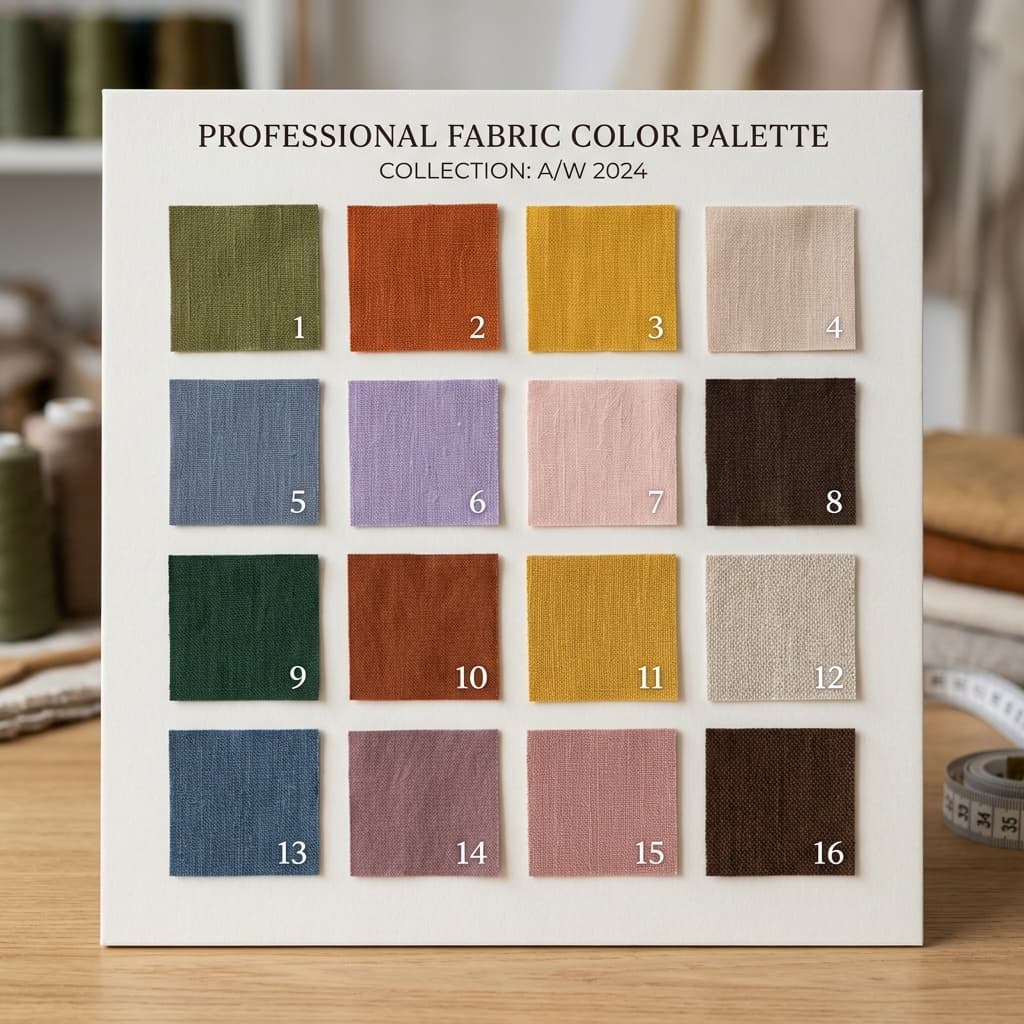
"The majority of procurement teams assess a fabric supplier in the same manner as they would a one-time vendor: examine t..."
The majority of procurement teams assess a fabric supplier in the same manner as they would a one-time vendor: examine the sample, compare the quote, and place the order. When you sign a long-term production contract in which the same supplier must deliver the same quality across dozens of reorders, numerous seasons, and increasing volume, that strategy falls apart.
However, it works well for a single buy order. An annoyance is a mismatched shade or a missed ship date on a one-time order. It can interfere with completing a production schedule for a multi-season contract. The vendor qualification procedures, contract terms, and verification checks that a single-order evaluation often overlooks are all covered in this article on choosing a bulk fabric supplier, designed especially for long-term dependability.
Quick Answer
Consistency and capacity should be taken into account prior to pricing when choosing a bulk fabric supplier for a long-term contract. Examining dye-lot control, manufacturing scale, compliance paperwork, and contract clauses that safeguard you on future orders—not just the first one—are all part of this. A provider that performs well on a single sample order may fail at scale if these mechanisms aren't in place.
- Verify production capacity against your actual multi-season volume, not just their sales pitch.
- Confirm dye-lot and shade consistency processes before signing — this is the most common failure point in repeat orders.
- Request GOTS/OEKO-TEX certificate numbers verified through the issuing body, not a forwarded PDF.
- Build AQL sampling standards and inspection checkpoints into the contract itself.
- Structure payment terms that keep leverage across the life of the agreement, not just the first shipment.
Why a Long-Term Contract Needs a Different Evaluation Than a One-Time Order
A provider selected for a single bulk order has to complete one task. For the duration of the contract, a supplier selected for a long-term fabric supply agreement must perform consistently across all reorders, seasons, and dye lots—a radically different capability to test.
Sample-order evaluation determines whether a provider can consistently produce high-quality cloth. As your order volume increases and your reorder cycle tightens, contract-level review determines whether they can consistently produce the same fabric, season after season. This is also why understanding what global buyers look for in fabric suppliers goes beyond sample quality and price—it includes production capacity, consistency, compliance, and the ability to support repeat orders.
Start With Production Capacity, Not the Supplier's Pitch
Without something giving—typically quality, occasionally the ship date, and sometimes both—a mill that has never reached your desired volume cannot abruptly scale to fulfill a multi-season contract.
Ask about the factory's capacity utilization, monthly production capacity by fabric, and largest order in the past year. If your estimated annual volume is several times their recent volume, expect delays or an unannounced subcontractor mid-contract. Not because the supplier is dishonest, but because capacity claims and reality may differ under continuous demand.
Dye-Lot and Printing Consistency: The Detail That Breaks Long-Term Contracts
This is one of the main reasons long-term fabric relationships end, and it often doesn't show up until after a few reorders. By then, it can be expensive and time-consuming to switch suppliers mid-season.
For dyed fabrics, ask whether the supplier reserves dye lots for your contracted volume, what shade tolerance and Delta-E limits they maintain between lots, and whether they complete lab-dip and bulk approval before every production run. For printed fabrics, check whether the same controls apply across digital fabric printing, screen fabric printing, and block printing, including color reproduction, print placement, registration, and repeat consistency.
You should also ask how these standards are documented from one production run to the next. A supplier without a clear process for dye-lot reservation, Delta-E tolerance, lab-dip approval, or print-quality control may simply ship whatever lot or production output is available when your reorder is due.
For a deeper look at how suppliers manage these challenges at scale, see fabric dyeing and printing consistency at scale, including color matching, lab dips, print approvals, and repeat-production controls.
Build Compliance Verification Into the Vendor Qualification Process
When it comes to contracts that feed retail or export channels, finding certification gaps midway through the contract is much more disruptive than finding them during the original vendor qualification. This is because an expired or unverifiable certificate can hold up an entire shipment at customs.
| Certification | What It Verifies | How to Verify It |
| GOTS | Organic fiber content, supply-chain ethics | Scope Certificate + Transaction Certificate, checked via the issuing body (Control Union, Ecocert, OneCert, Oregon Tilth) |
| OEKO-TEX Standard 100 | Chemical safety of the finished fabric | Certificate number checked via the official Label Check database, matched to product class |
| Social compliance (SMETA/BSCI/WRAP) | Labor conditions, factory safety | Audit report dated within 12 months, from an accredited firm |
Add a clause to the contract stating that the seller must notify you if the version changes or the certification is lost while the contract is still in effect. This is very important now that GOTS Version 8.0 is being put out. This is particularly important for sustainable fabric sourcing, where certification status can directly affect retailer requirements and export documentation. Beginning in March 2027, audits will have to follow the new standard.
Set Quality Standards in the Contract, Not in Conversation
When there is a disagreement, a verbal agreement about good quality is no longer valid. An AQL standard that is written down is.
In the contract, make it clear what the AQL level is (usually 2.5 for major defects and 4.0 for minor defects on high-end clothing fabric, lowered to 1.0 to 1.5 for technical or luxury textiles) and who inspects the goods (your team, a third-party company like SGS or Bureau Veritas, or the factory's own quality control) and when they do it (before production, during production, and finally, as a random check before each shipment).
These requirements should be backed up by fabric testing and quality inspection that is written down before the shipment, especially if the same material will be ordered again and again for different production cycles.
Structure Payment Terms That Protect the Whole Contract, Not Just the First Order
If the seller changes their leverage when you need them for the second, third, and fourth reorders of the season, good terms on the first shipment won't matter much.
- Negotiate consistent terms across every reorder — not just an introductory rate on the first batch.
- Use a partial deposit structure (e.g., 30% deposit, 70% against the bill of lading) rather than a full upfront payment for any single shipment.
- Confirm the invoicing entity's name matches the registered supplier every time, not just at contract signing.
What a Trial Order Reveals Before You Sign a Multi-Season Deal
All of the checks above are proof on paper. Before committing to a supplier for more than one season, place a trial order to see whether their actual process matches what they said it would be like in real life.
Run a trial order of the contract amount. This is not a small sample, but enough to test the consistency of the dye lots and the inspection process on a larger scale. Hari Krishna offers Dyed Sample Yardage, and Printed Sample Yardage, with no minimum order, and both trial and bulk orders go through the same three-stage quality assurance process. This means that a trial really shows what a long-term contract would look like in production.
Where Hari Krishna Fits Into This Process
Hari Krishna was designed to help brands make this change—from one-time spot orders to a structured, recurring sourcing relationship—so production can be planned around real reorder frequencies rather than starting from scratch each time an order is due.
Fabric sourcing, dyeing, printing, and garment manufacturing are all done in the same ecosystem rather than coordinated with different vendors, which is where long-term contracts usually fall apart, because each extra vendor in the chain is another place where quality can slip. With 10+ years of experience in dyeing and printing, and a proven manufacturing network capable of handling 20,000+ meters/month, the same systems that handle the first trial order will also handle a multi-season contract. No smaller pilot process is replaced as volume increases.
Some details that are essential to the above checks:
- Trial before commitment — You can get sample yardage from a collection of thousands of fabrics with no minimum order, so you can try it out before you commit to a full-scale order.
- Consistent process, not a best-case sample — There are three stages of quality assurance that both trials and bulk orders go through. This means that what a trial shows is what production will look like when it's done.
- Batch-level documentation — Support for GOTS, FSC, and BCI certifications is given for each batch, not as a general company claim. This is what the above compliance disclosure clause needs to confirm.
- Capacity headroom — Production can go from low-MOQ orders to large-volume projects without switching to a different vendor in the middle of the contract. This is important for the capacity check we did earlier in this guide.
In real life, this means that completing a fabric supplier audit checklist for enterprise buyers is still necessary. This is what makes the checklist actually verifiable with a specific provider, batch by batch, for the life of a contract, not just the first order.
Supplier Evaluation Checklist for Long-Term Fabric Contracts
- Your real multi-season volume, not your sales claims, will be used to check your production capacity.
- Dye-lot reservation and shade tolerance (Delta-E) confirmed in writing.
- GOTS/OEKO-TEX/social compliance certificates verified independently, with a disclosure clause for any lapse.
- AQL level and inspection stages written directly into the contract.
- Consistent payment terms across every reorder, not just the first shipment.
- Trial order completed at contract-representative volume before signing.
FAQ
What's The Biggest Difference Between Choosing A Supplier For One Order Versus A Long-Term Contract?
An order only needs to be successful once. For the duration of a long-term contract, the provider must replicate the same quality and shade in every reorder; this necessitates verifying dye-lot equipment and capacity, not just the initial sample.
How Do I Know If A Supplier Can Actually Handle My Full Contract Volume?
Request the biggest order they have placed in the previous 12 months. Expect delays or quality problems as they try to make up the difference if your anticipated traffic is several times higher.
Should Certification Requirements Be Written Into The Contract Itself?
Yes. As the statutory audit date for GOTS Version 8.0 approaches in March 2027, it is important to include a condition demanding disclosure of any certification lapse, expiration, or version change within the contract period.
What AQL Level Should A Long-Term Fabric Contract Specify?
High-quality clothing fabric usually has an AQL of 2.5 for major defects and 4.0 for minor defects. This should usually be tightened to 1.0-1.5 for technical or high-end fabrics.
Is A Trial Order Necessary If The Supplier Has Good References?
Yes. You can find out how well a supplier did for someone else by asking for references. Before you commit, you should place a trial order of a contract-representative volume to see how well they do with your particular fabric, dye lot, and inspection standard.
Conclusion
The purpose of the checks in this article is to detect specific errors before they result in a season-ending loss. The three factors that are most likely to appear successful on paper but perform poorly in practice are capacity, dye-lot control, and compliance paperwork. Consequently, they must be verified rather than merely presumed prior to signing. When selecting a reliable fabric supplier for long-term and repeat production, procurement teams must conduct these tests.
Before you do anything else, make sure you have a written confirmation of the dye-lot reservation for the trial order at the contract-representative volume. This will help you choose a long-term source for the next production cycle. Make sure the agreed-upon volumes are reasonable for your company before committing to a multi-season contract, and be aware of how MOQ in fabric sourcing can impact inventory, cash flow, and repeat-order flexibility.