
How to Audit a Bulk Fabric Supplier: An Inspection Checklist for Fashion Brands
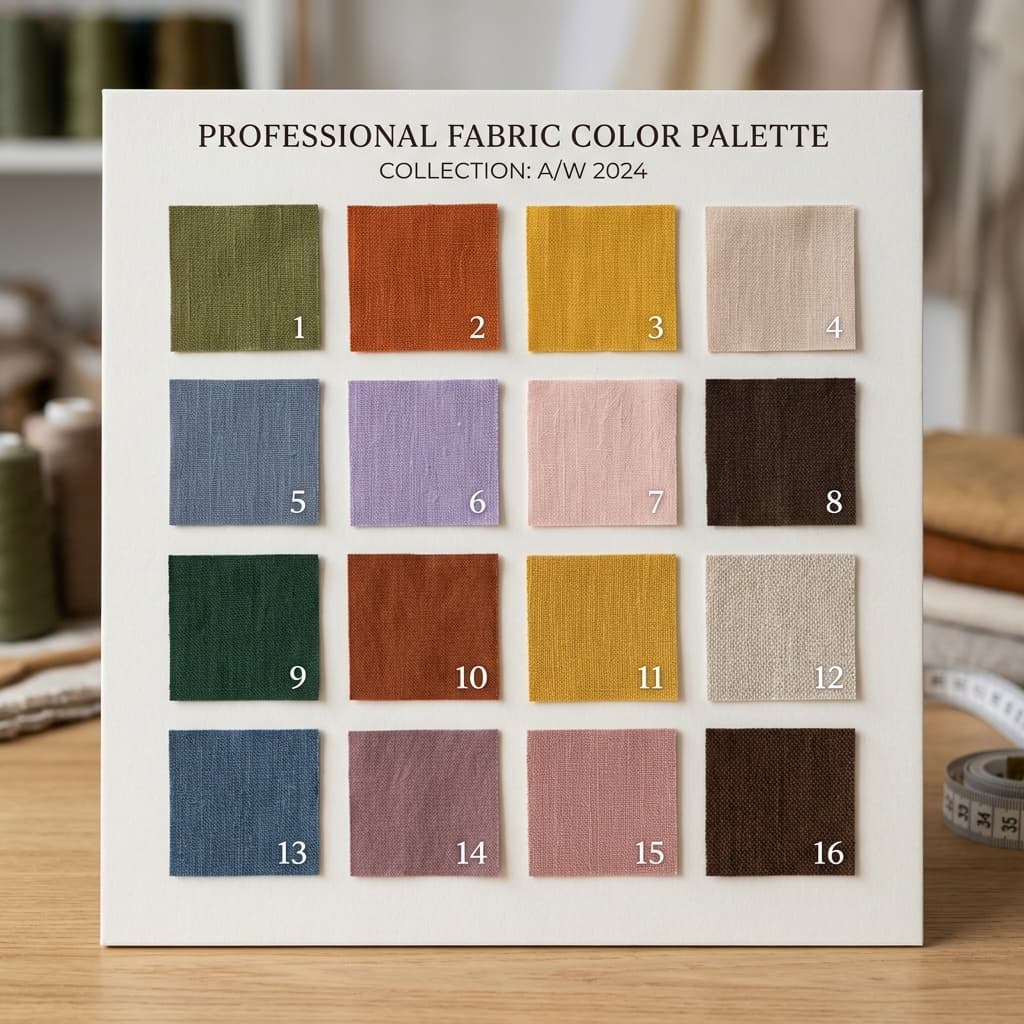
"Every sourcing manager has heard the same story: the supplier did a great job on the sample, gave a good price quote, an..."
Every sourcing manager has heard the same story: the supplier did a great job on the sample, gave a good price quote, and responded quickly to emails. But when the bulk shipment arrived, there were color differences between rolls, the GSM wasn't what was expected, or the factory that wasn't vetted sent the order to an uncertified subcontractor. How to audit a bulk fabric supplier isn't a single inspection at the end of the process. It's a sequence — verifying who you're actually dealing with, checking the fabric against defensible standards, confirming labor and chemical compliance, and proving it all with a small trial order before the real volume goes out. This is that sequence, in the order it should actually run.
Quick Answer
Auditing a bulk fabric supplier means checking different things at three separate decision points — entity and capability checks before sampling, quality and compliance verification before approval, and a trial order before scaling to full volume. The most costly sourcing mistakes occur when a buyer collapses these three stages into a single quick check based on a good sample and a fast reply.
- Before sampling: Check the legal entity and make sure that it’s a factory and not just a broker.
- Before approval: Verify the fabric against AQL sampling standards, and confirm social and product compliance separately.
- Before scaling to bulk: Run a trial order of 500–1,000 meters under your real terms and inspection protocol.
- Match the bank account name to the registered legal entity at every payment stage, not just the first
- Verify GOTS and OEKO-TEX certificate numbers directly through the issuing body — never from a forwarded PDF.
What This Fabric Supplier Audit Checklist Covers

Whether you're searching for how to audit a bulk fabric supplier, looking for a fabric supplier verification checklist, or trying to work out how to verify a fabric supplier before placing a bulk order, the underlying question is the same: how do you know a supplier will actually deliver what they promised, at scale, without a costly surprise mid-production?
This guide answers that in three parts, matched to the three points where a buyer actually makes a decision:
- Phase 1 — Before sampling: Legal entity verification and confirming who you're really dealing with.
- Phase 2 — Before approval: Fabric-level quality checks, AQL sampling, and separating quality compliance from social compliance (SMETA, BSCI, WRAP).
- Phase 3 — Before bulk PO: Capacity checks, references, payment structure, and a trial order.
Each section below covers what to check, why it matters, and what a real answer from a supplier looks like versus a red flag — so you can apply this whether you're vetting your first overseas fabric mill or re-auditing an existing bulk fabric sourcing partner for a new season.
Phase 1: Before You Request a Sample — Verify Who You're Actually Dealing With
This phase happens before any fabric changes hands. Its only job is to confirm the supplier is a real, traceable business — because none of the quality checks that follow mean anything if the entity behind them can't be verified.
- Pull the supplier's business registration number and check it against the relevant national registry (China's National Enterprise Credit Information System, India's MCA portal, or the local equivalent).
- Confirm the legal name on that registration matches the name that will appear on the invoice and, eventually, the bank account for payment.
- Treat any mismatch — a factory registered under one name with an invoice payable to a different entity, sometimes in a different country — as a reason to stop, not a formality to overlook
- Confirm whether you're dealing with a factory or a trading company; neither is automatically wrong, but they behave differently once a dispute arises.
| Factor | Real Factory | Trading Company |
| Production control | Direct | Runs through a mill network |
| Problem resolution | Faster, fewer intermediaries | Depends on the mill relationship |
| Pricing | Often more competitive | May carry broker margin |
| On-site verification | Straightforward | Harder to confirm the actual production site |
Phase 2: Before You Approve the Fabric — Check Quality, Documentation, and Compliance
This phase is when the entity has a sample and has passed through the verification process. Here the purpose is to validate that the cloth is indeed what it claims to be and that the supplier's compliance documentation is actually worth anything. Get real numbers, not marketing language. A usable spec sheet includes:
- Fiber composition by percentage
- GSM (grams per square meter)
- Weave or knit construction and cuttable width
- Shrinkage by warp and weft
- Colorfastness ratings for wash, light, and rubbing
Pull the sample from an actual production roll, not a sample book — request at least one meter cut directly from a current roll, labeled with dye lot and roll ID. A showroom swatch is curated to look its best; a cut-from-roll sample is what's actually coming off the line.
Set your quality benchmark before you need it. AQL tables under ISO 2859-1 give a statistically defensible method for accepting or rejecting a lot:
- Premium apparel fabric typically runs on AQL 2.5 for major defects and 4.0 for minor defects.
- Technical, luxury, or medical-grade textiles often tighten this to AQL 1.0–1.5.
- Put the agreed AQL level into the purchase order itself, not into a call or email thread.
Confirm inspection happens at three points, not one: a pre-production check against the tech pack, in-line inspection during the run and a final random examination against the agreed AQL before shipment. Ask if independent third-party inspection (SGS, Bureau Veritas, Intertek, TÜV, or Qima) is acceptable — pushing back here on a major order is a real red flag, not a detail to haggle over.
Verify social compliance separately from quality compliance — a factory can pass one and fail the other entirely:
| Framework | Strongest Region | Output |
| SMETA | Global, especially UK | Findings report, valid 12 months |
| BSCI | Europe | Rating A/B/C, run by amfori |
| WRAP | United States | Certification tier |
| SA8000 | Global, high-rigor buyers | Certification |
Verify certificates the way you'd verify a bank wire. For GOTS, check the Scope Certificate and batch-specific Transaction Certificate directly through the issuing body — Control Union, Ecocert, OneCert, or Oregon Tilth are among the approved certifiers. For OEKO-TEX, every Standard 100 certificate includes a number verified in the official Label Check database, matched to your product class. Never accept a certificate as a forwarded screenshot.
Confirm dye lot management in writing. Ask if the supplier will hold one dye lot for your order, what their Delta-E tolerance is between lots and if they do a lab dip and bulk-approval process. A supplier with no meaningful solution to this will send whichever lot is on the floor that week.
Phase 3: Before You Scale to Bulk Volume — Prove It With a Trial Order
This is the final phase, and it's the one most buyers skip because they're in a hurry. It happens after documentation and sample review have both cleared, and right before the full-volume PO goes out.
- Check production capacity against your actual order size — ask for the largest single order the factory has run in the past 12 months; if your order is several times larger, expect delays or an undisclosed subcontractor mid-run
- Call two or three current client references directly — ask whether recent ship dates were hit and how disputes get handled.
- Structure payment to keep leverage: a 30% deposit / 70% against bill of lading, or a letter of credit for larger orders, rather than 100% upfront by wire
- Place a trial order of 500–1,000 meters at your real specifications, payment terms, and inspection protocol — this is the only step that tests everything from Phases 1 and 2 at once, under actual production conditions.
Hari Krishna supports sample yardage at no minimum order and runs every batch — trial or bulk — through the same three-stage QA workflow, so a trial order reflects the exact process a full run would use.
Full Checklist by Phase
Phase 1 — Before Sampling
- Legal entity registered and verified against national records.
- The bank account name matches the registered entity.
- Factory vs. trading company confirmed.
Phase 2 — Before Approval
- Spec sheet with GSM, shrinkage, and colorfastness figures on file.
- Cut-from-roll sample with dye lot and roll ID.
- Agreed AQL level written into the purchase order.
- Third-party inspection accepted by the supplier.
- Social compliance audit on file (SMETA, BSCI, or WRAP), dated within 12 months.
- GOTS/OEKO-TEX certificate numbers verified independently.
- Dye lot reservation and shade tolerance confirmed in writing.
Phase 3 — Before Bulk PO
- Production capacity checked against your order size.
- Two to three current references are called.
- Payment terms include partial deposit or escrow protection.
- Trial order of 500–1,000 meters completed successfully.
FAQ
What's The Single Most Important Check Before A First-Time Bulk Fabric Order?
Legal entity verification, done first. Every later check — quality, compliance, capacity — is irrelevant if the company on the invoice isn't the company actually producing your fabric.
Is This Checklist A Strict Sequence, Or Can The Phases Overlap?
Phase 1 should always come first, since nothing else is worth checking until the entity is verified. Phases 2 and 3 can overlap in practice — compliance verification and trial-order logistics are often arranged in parallel.
How Is A Factory Audit Different From A Pre-Shipment Inspection?
Before you make a deal, a factory audit (Phase 1–2) checks the supplier's general skills, legitimacy, and systems. As soon as one finished batch is finished, it is inspected to make sure it meets the agreed-upon AQL level.
What AQL Level Should Apply To Bulk Fabric Orders?
ISO 2859-1 says that premium clothing fabric must have an AQL of 2.5 for major flaws and 4.0 for minor defects. This is usually made tighter to 1.0 to 1.5 for technical or high-end fabrics.
Does A GOTS or OEKO-TEX Certificate Also Cover Labor Compliance?
No. Certification only confirms the amount of fiber or the safety of chemicals. There needs to be a separate social compliance audit, like SMETA, BSCI, or WRAP, for working conditions and factory safety.
Can This Audit Be Conducted For An Overseas Supplier Without An In-Person Visit?
Most of Phases 1 and 2, yes — registration checks, certificate verification, video walkthroughs, and reference calls can all be done remotely. Phase 3's trial order still needs to be physically shipped and inspected, which is exactly why it's the final proof point.
Conclusion: What This Actually Comes Down To
Three phases sound like a lot, but almost none of the checks inside them are optional once real money is on the line. The pattern behind most bulk fabric disputes isn't a supplier that set out to deceive — it's a buyer who collapsed all three phases into one quick check because the sample looked good and the price was right.
If there's one phase never to skip, it's the third. Everything from Phase 1 and 2 gets tested for real the moment 500 meters actually ships under your terms. Run that trial before the full PO goes out, every time, with every new supplier.